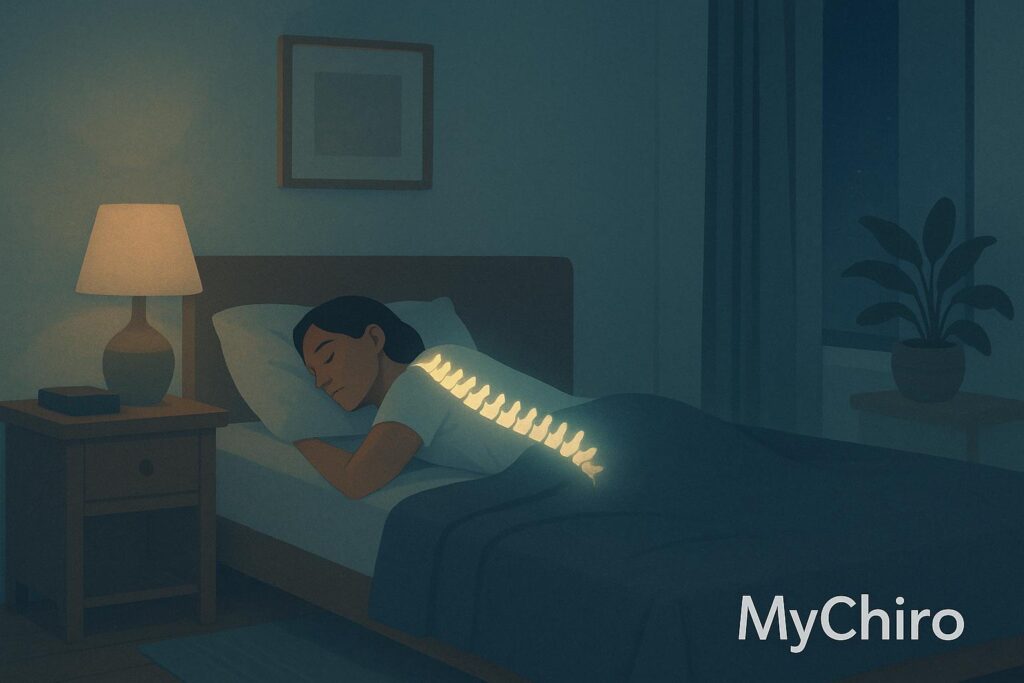
Chiropractic care may be considered for some back or neck symptoms that make it uncomfortable to rest. It is not an established treatment for insomnia or stress recovery. Spinal adjustments have not been shown to reliably reset the autonomic nervous system or balance sleep hormones. If muscle tension and poor sleep occur together, each concern may need assessment.
Key Points:
- Stress and Sleep Problems: Stress and poor sleep can affect one another. Persistent sleep difficulty deserves assessment of its causes.
- Spinal Misalignment Claims: Sleep problems do not show that vertebrae are out of place or that nerve signals need to be restored by adjustments.
- Chiropractic Scope: Assessment may identify options for a separate musculoskeletal problem. A change in comfort is different from treating a sleep disorder.
- Research Limits: Cortisol, heart-rate variability or other laboratory measurements do not by themselves establish better sleep or stress recovery.
- Pain and Sleep: Tell your clinician if pain interrupts sleep. Faster sleep onset or deeper sleep should not be promised from an adjustment.
Speak with your GP about ongoing insomnia, loud snoring with breathing pauses, or excessive daytime sleepiness. Musculoskeletal care should not delay investigation or appropriate sleep treatment.
Video Discussion: Chiropractic Care and Stress
The Nervous System’s Role in Stress and Sleep
The autonomic nervous system oversees essential bodily functions like heart rate, breathing, and digestion. It consists of two main branches: the sympathetic nervous system, responsible for the “fight-or-flight” response during stress, and the parasympathetic nervous system, which encourages “rest-and-digest” activities to help the body relax and recover.
Sleep and stress involve several interacting systems. A simplified description of sympathetic and parasympathetic activity cannot diagnose a sleep problem or identify a need for chiropractic treatment.
The Parasympathetic Nervous System and Relaxation
The parasympathetic nervous system contributes to functions such as slowing heart rate and digestion. Sleep is regulated by more than this system alone; an adjustment is not established as a switch into restorative sleep.
Rest and recovery involve many processes. Mentioning the vagus nerve does not demonstrate that a particular spinal technique improves sleep, memory consolidation or hormone regulation.
When discussing spinal health, focus on symptoms, function and care supported for the problem being assessed. Ordinary posture does not establish blocked nerve signals. Advice about spinal health should not be used to promise nervous-system balance or improved sleep.
If stress is affecting sleep or daily life, discuss it with an appropriate healthcare professional.
Chronic Stress and Sleep Problems
Stress can make it harder to settle or stay asleep, while poor sleep can make daily demands harder to manage. A persistent problem is worth discussing with your GP rather than assuming that a hormone level is abnormal.
Insomnia can have several contributing factors, including routines, health conditions, medicines and emotional concerns. Symptoms alone do not establish excessive cortisol or a problem that can be corrected by an adjustment.
If you are worried about blood pressure, heart symptoms or other health changes, seek medical advice. These concerns should not be attributed to spinal misalignment.
A plan for poor sleep should address its likely causes. Spinal care may be discussed for separate back or neck discomfort, but chiropractic adjustments are not established as a way to reset the sleep cycle or stress response.
Chiropractic Care: Scope and Evidence
An adjustment is a manual technique that may be considered for selected musculoskeletal problems. It does not routinely reposition vertebrae or restore a presumed stress-recovery pathway.
Understanding Nerve-Interference Claims
A posture difference or stiff joint does not demonstrate that nerves controlling relaxation are blocked. Claims that upper-neck adjustments lower blood pressure or activate parasympathetic recovery need evidence for those clinical outcomes.
Treating muscle or joint discomfort does not establish improved immune or endocrine function. These broader health claims should not be used as a reason for repeated adjustments.
Research on Chiropractic Care and Stress Recovery
Some studies investigate muscle activity after manual treatment. A short-term percentage change does not predict relief from chronic muscle tightness or prove better sleep. Clinical benefits and harms need to be assessed separately.
Hormones and signalling molecules may be measured in research. Their normal roles should not be confused with a proven effect of chiropractic treatment:
| Hormone | What the measurement does not establish |
|---|---|
| Neurotensin | A change does not establish treatment of stress or sleep problems |
| Oxytocin | A change does not prove improved bonding, relaxation or nerve communication |
| Cortisol | A change does not demonstrate correction of a hormone disorder or insomnia |
A brief biochemical response cannot establish lasting stress recovery, calmer mood or better social connection. Research needs to measure meaningful patient outcomes over an appropriate period.
Stress and physical discomfort can be related without spinal alignment being the cause. Regular adjustments are not established as necessary to maintain stress resilience or normal sleep.
sbb-itb-585d67d
Pain, Comfort and Sleep
Back or neck pain may make it harder to find a comfortable position in bed. Assessment can help identify options for that pain, while persistent sleep problems may need separate care.
Pain Relief and Better Sleep
Pain and sleep can influence one another. A report in a sleep-medicine journal, or an individual report of sleeping better after a visit, must be interpreted in context. It does not establish immediate or lasting sleep benefits from an adjustment. Ask what evidence supports treatment for your actual pain condition.
Limits of Nervous-System Claims
Spinal manipulation has not been established as a way to regulate melatonin, restore the sleep-wake cycle or create deeper sleep by changing autonomic activity. Claims about these mechanisms should not replace assessment of a sleep disorder.
Follow-up for a musculoskeletal concern should depend on symptoms, function and progress, rather than a promise that ongoing adjustments train the body to sleep.
Comfortable Positions for Rest
Try a sleeping position and support that feel comfortable for your neck and back. Advice about posture should suit the individual. There is no single spinal alignment that guarantees restorative sleep.
Good sleep habits can be useful, but persistent insomnia may need a specific treatment plan. Cognitive behavioural therapy for insomnia is a recommended first-line treatment for chronic insomnia.
Assessing Physical Symptoms That Affect Rest
If pain or stiffness affects rest, a clinician can assess those symptoms and discuss appropriate options. A technique should not be selected on a promise of regulating stress hormones or sleep cycles.
Musculoskeletal Care Options
Spinal manipulation may be considered for selected pain conditions. A study in the Journal of Manipulative and Physiological Therapeutics does not establish a general success rate for improved sleep. Discuss the expected benefit, uncertainty, risks and alternatives for your musculoskeletal concern.
Upper cervical techniques still require an appropriate clinical reason and risk discussion. They are not established treatments for a sleep disorder or a presumed interruption of brain-hormone communication.
Soft tissue therapies may be considered for muscle discomfort. A review in Complementary Therapies in Clinical Practice should be interpreted according to the specific intervention and population studied, rather than used to promise sleep improvement from all chiropractic treatments.
Ask what a proposed treatment is intended to help and how its effect will be reviewed.
Ergonomic guidance may include trying pillow support or a position that is comfortable. Advice should account for your health and preferences. A particular pillow, mattress or sleeping position is not necessary for everyone.
Movement and relaxation strategies may be useful for comfort or settling before bed. They do not establish an added sleep benefit from manipulation. Ask for advice suited to your health and symptoms.
A plan should make clear which concern each recommendation addresses and when progress will be reviewed.
Individual Assessment and Review
Describe what keeps you awake, whether pain is present and how you feel during the day. A sleep diary may help your GP understand the pattern. Assessment should guide care rather than a standard course of adjustments.
For musculoskeletal symptoms, an assessment may consider movement, strength, daily activities and relevant neurological signs. Care options can include advice, exercise, manual therapy or referral; treatment is not automatic.
Coordinated care may involve your GP, a sleep clinician or a mental health professional when appropriate. A chiropractor can address a separate musculoskeletal concern within their scope, without claiming to treat a sleep disorder.
If a trial of musculoskeletal care is agreed, set clear goals and a review point. Lack of progress is a reason to reassess the plan, not automatically to increase visits.
Sleep habits such as a regular routine, a comfortable environment and limiting stimulants near bedtime may help. These habits do not require chiropractic treatment. Persistent insomnia warrants appropriate assessment and care.
Conclusion: Separate Sleep Care from Musculoskeletal Care
Chiropractic adjustments are not an established treatment for insomnia, stress recovery or autonomic imbalance. A musculoskeletal assessment may be useful when back or neck discomfort is a separate concern.
Changes in heart-rate variability or cortisol in a study cannot by themselves show better sleep. Meaningful outcomes, reliable comparison groups and harms matter when judging a treatment claim.
Research in Complementary Therapies in Clinical Practice should be assessed for the particular technique, condition and outcome studied. Evidence about muscle discomfort does not automatically establish a treatment for insomnia.
Better sleep cannot be promised by activating spinal receptors, correcting alignment or improving presumed communication with endocrine glands. Sleep problems should be assessed on their own merits.
If stress or poor sleep is affecting daily life, speak with your GP. If pain is also present, discuss care options for that concern and how they fit with the wider plan.
At MyChiro in Bondi Junction, new patients can book a free initial consultation about back pain, neck pain or headaches. Same-day treatment is optional, costs $125 and is offered only if clinically appropriate, with no obligation to proceed.
This article is intended for educational purposes only and should not replace personalised healthcare advice. Always consult a registered health professional for tailored recommendations.
FAQs
Do spinal adjustments reset the nervous system for sleep?
No reliable clinical benefit of that kind has been established. A measurement involving the parasympathetic nervous system is not proof that an adjustment treats insomnia or restores normal sleep.
If you have persistent sleep difficulty, discuss assessment and appropriate treatment with your GP. Separate back or neck symptoms can be considered without assuming that alignment is the cause of poor sleep.
Can chiropractic care help with stress and sleep issues even if I don’t have chronic pain?
Sleep difficulty without a musculoskeletal problem is not a reason by itself to seek adjustments. References to the nervous system or parasympathetic system do not establish an effective treatment for stress or insomnia.
Your GP can help assess possible causes and discuss sleep or stress-management options. Chiropractic care should not delay that assessment.
What habits may support sleep and help manage stress?
Practical steps may include a regular sleep routine, appropriate activity, a comfortable sleep environment and relaxation strategies. Choose changes that fit your health and circumstances.
These steps do not require adjustments. If sleep problems persist, ask about evidence-based care such as cognitive behavioural therapy for insomnia and assessment for other sleep conditions.