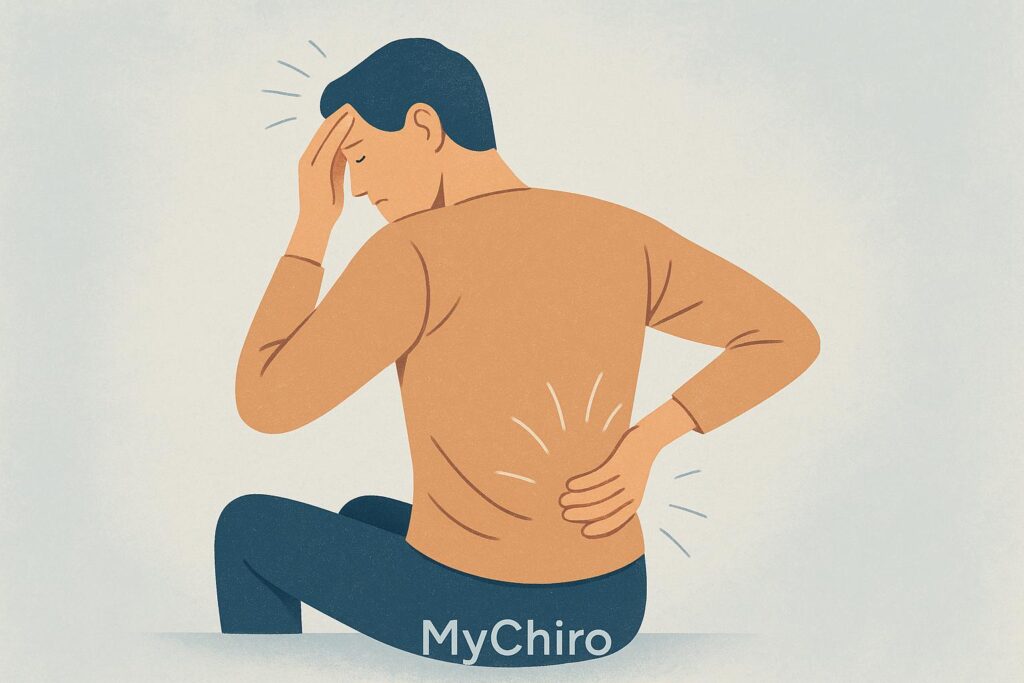
Stress can accompany headaches and neck discomfort, but it does not establish that the spine is misaligned or the nervous system is overloaded. Understanding the headache type and checking for concerning symptoms helps guide care.
- Tension-type headaches are a recognised headache disorder. Muscle tension alone does not explain every headache.
- Posture may affect comfort, but a particular position does not prove nerve irritation or identify the cause of a headache.
- Stress, sleep and daily routines may be relevant to headache patterns; symptoms cannot establish a hormone imbalance.
- A headache diary can help you describe frequency, associated symptoms and possible patterns to a clinician.
Care options depend on the diagnosis. Whether chiropractic care, exercise, medicines or other support is appropriate should follow assessment. Call 000 for a sudden severe headache, or a headache with new weakness, difficulty speaking, confusion, or fever and a stiff neck.
Video: Headaches and Self-Care
Understanding Stress, Neck Pain and Headaches
Headaches and concerns about spinal health can occur together, but this does not show that stress has damaged the spine. Migraine, tension-type headache and cervicogenic headache are different conditions and may need different approaches.
Your Body’s Stress Response System
The hypothalamic–pituitary–adrenal (HPA) axis and autonomic nervous system (ANS) are involved in responses to stress. Headaches or neck tension do not establish that either system is malfunctioning, and they cannot be used to infer persistently high cortisol.
Stress can be accompanied by muscle tension. This does not mean the body is permanently stuck in fight-or-flight mode or requires spinal treatment to restore nervous-system balance.
Muscle Tension, Position and Comfort
You may notice discomfort around the neck, shoulders or upper back during a stressful period. Several factors can contribute, including activity, sustained positions, sleep and other health conditions. Persistent pain or headache deserves assessment rather than a presumed stress-related diagnosis.
Neck tenderness or stiffness does not show that blood vessels are compressed or nerves are irritated. It also does not establish which headache disorder is present.
Stress as a Possible Headache Contributor
Some people report stress around migraine attacks or other headaches. A possible trigger is not the same as a diagnosis, and identifying one does not explain every attack.
Claims about brain inflammation, shrinking brain regions or altered blood flow should not be used to explain an individual’s headache without appropriate clinical evidence.
A headache cannot be used to infer damaged nerve cells, mitochondrial dysfunction or spinal misalignment. The relevant questions are what symptoms are present, whether urgent care is needed and which treatment options suit the diagnosis.
Interpreting Research on Stress and Headaches
Research may identify associations between stress and headache patterns. Association alone cannot show that stress caused an individual’s headache or that spinal treatment will help.
Stress and Headache Frequency
Headaches are common, but their causes and treatment needs differ. A clinical history should consider the pattern, severity, associated symptoms and any change from usual.
If you have frequent headaches, seek medical advice rather than assuming stress is the explanation. A diary of headache symptoms and medicines used can help guide the discussion.
Distressing experiences may be relevant to wellbeing and headache management. They should be discussed sensitively, with psychological support available when needed.
A case report cannot establish that a treatment restores nervous-system function, is more effective than other care or will produce similar results for another person. Treatment decisions need a broader assessment of evidence, benefits, risks and alternatives.
Workplace Demands and Headache Symptoms
Workplace stress and long periods at a desk may be relevant to a person’s symptoms. Observational studies cannot show that sitting or stress caused a particular headache or that spinal treatment is required.
Neck discomfort, poor sleep, eye strain and headache may occur together. They do not all have the same explanation, and each may need attention in an assessment.
Migraine can include neck symptoms; neck pain alone does not prove a spinal cause. A comfortable workstation may help with daily activity, but changing it cannot guarantee fewer headaches.
Daily Pressures and Major Life Changes
Everyday demands and major life changes can both affect how people feel and cope. Their relevance to headaches varies between individuals.
A stressful event does not inevitably turn occasional headaches into a chronic condition. If your headache pattern changes, seek assessment rather than assuming the change is due to stress.
Support should reflect your circumstances and the effect of symptoms on your day. There is no need to blame yourself or your stress response for having headaches.
A headache diary can record symptoms alongside relevant changes in sleep, activity or daily demands. A clinician can help interpret patterns without assuming that every association is a cause.
sbb-itb-585d67d
Treatment Options Depend on the Headache Type
An appropriate assessment comes before treatment selection. New, changing or frequent headaches may need medical evaluation, and some symptoms need urgent care.
Considering Chiropractic Care
Care may involve advice, exercises, soft tissue treatment or spinal adjustments for selected musculoskeletal complaints. These should not be presented as correcting the root cause of all stress-related headaches or restoring nervous-system function.
Spinal manipulation is one possible intervention to discuss after assessment.
Its suitability, likely benefits, risks and alternatives depend on the individual.
Evidence discussed in the Journal of Manipulative and Physiological Therapeutics and other research should be interpreted by headache type and study quality. It does not justify promising migraine relief through spinal realignment or calming an overactive nervous system.
Whether chiropractic adjustments are appropriate depends on assessment. Cervicogenic headache requires evidence that a neck disorder is causing the headache; it is not established by posture or neck tension alone. Tension-type headache and migraine should not automatically be relabelled cervicogenic.
A single person’s improvement after treatment cannot predict another person’s outcome or establish that chiropractic care is superior to medical treatment. Agree on goals and review whether any chosen care is helping.
A fair comparison considers benefits, risks, alternatives and the condition being treated. Different options may address different needs.
Comparing Different Treatment Methods
The table below outlines questions to discuss with a clinician. It does not rank treatments or promise a recovery timetable.
| Treatment Method | Approach | Evidence and Limits | Timing and Review | When to Discuss |
|---|---|---|---|---|
| Chiropractic Care | Assessment, advice, exercise and selected manual techniques | Evidence varies by condition and headache type; it does not establish general nervous-system correction | No guaranteed immediate relief; agree on goals and review progress | Selected neck-related musculoskeletal complaints after assessment |
| Physiotherapy | Exercise therapy, manual techniques, movement rehabilitation | Options depend on the diagnosed condition and individual needs | Progress varies; review function, symptoms and exercise tolerance | Neck pain, movement concerns or discomfort associated with posture |
| Medication | Acute or preventive treatment selected for the headache diagnosis | Medicines can have roles in acute relief and prevention; benefits and risks depend on the medicine and person | Timing depends on the medicine; follow prescribed directions and review response | Discuss migraine, frequent headaches and medicine use with a doctor or pharmacist |
| Mindfulness/Meditation | An optional approach to coping and relaxation | Evidence and suitability vary; not a replacement for headache assessment | No fixed benefit timetable; stop if the practice increases distress | People who want to discuss additional support for stress |
Research about neck pain, including reports in the Journal of Manipulative and Physiological Therapeutics, should not be used to claim superiority for headache care. Treating neck discomfort and managing a headache disorder can involve different goals.
Some people may use more than one approach, but adding treatments does not automatically give better results. Evidence for chiropractic treatment varies by condition. Migraine or suspected cluster headache needs appropriate medical care; manual therapy should not delay it.
At MyChiro in Bondi Junction, you can discuss headaches with neck pain and whether care or referral may be appropriate. New patients can book a free initial consultation. Optional same-day treatment is $125 if clinically appropriate, with no obligation to proceed.
Before manual treatment, discuss expected benefits, risks and alternatives. Temporary soreness can occur and rare serious complications have been reported, particularly relevant when considering neck manipulation. You can decline a technique or choose another option.
Self-Care Alongside Appropriate Assessment
Daily routines may support comfort and wellbeing, but they do not guarantee headache prevention. Choose manageable changes and seek advice if symptoms are new, frequent or worsening.
A Comfortable Desk Setup
Adjust your workstation to make the task comfortable and vary your position when practical. There is no single posture that guarantees freedom from headaches or protects the nervous system.
Chair positioning: Choose comfortable support and adjust the seat to suit your body and task. If your feet do not reach the floor comfortably, a footrest may help.
Monitor placement: Position the screen so you can read it without repeatedly straining to see. Adjust it for your vision and glasses. A concern about forward head posture does not by itself establish a headache diagnosis.
Keyboard and mouse positioning: Keep frequently used equipment within comfortable reach. Let your shoulders relax and vary your position rather than holding one rigid posture.
Consider glare, screen brightness and opportunities for brief visual or movement breaks. Persistent visual symptoms or headaches should be discussed with an appropriate clinician.
Relaxation may be another useful option if it suits you, alongside assessment and any agreed headache treatment.
Relaxation Methods and Better Sleep
Relaxation or biofeedback may be considered for some people as part of headache management. Effects vary, and a fixed percentage improvement or a claim of no side effects would be misleading.
Choose a relaxation practice you find manageable, and discuss persistent symptoms rather than relying on self-care alone.
Breathing exercises: Try slow, comfortable breathing without forcing deep breaths or long breath holds. Stop if you feel dizzy, breathless or distressed.
Progressive muscle relaxation (PMR): Some people find gentle muscle-tensing and relaxing exercises useful. Avoid painful areas and stop if symptoms worsen; there is no guaranteed headache-prevention effect.
Sleep: Aim for a routine and a position that feel comfortable. A mattress or sleeping position cannot guarantee prevention of morning headaches. Discuss recurrent morning headaches, poor sleep or other concerning symptoms with your doctor.
There is no single daily relaxation duration that is best for everyone. Choose a manageable practice and review whether it helps you cope.
Regular Movement and Exercise
Manageable physical activity can support general wellbeing. Choose activity appropriate to your health and symptoms rather than exercising to correct presumed stress-hormone or spinal faults.
Strengthening exercises: A clinician can help select exercises when needed. Planks or abdominal exercises are not required for everyone with headaches, and core weakness should not be assumed to be the cause.
Low-impact activity: Walking, swimming or cycling may suit some people. Build up according to your ability and obtain advice if activity brings on new or unusual headaches.
Stretching: Gentle movement may feel useful, but stretching is optional. Avoid forceful neck movements and stop with sharp pain, dizziness or new neurological symptoms.
Take manageable movement breaks when practical. If exertion produces a sudden severe headache, stop and seek emergency medical help.
Regular activity can be part of a broader health plan. It should not be promoted as a guaranteed way to prevent headaches or a substitute for appropriate diagnosis.
Key Points to Remember
Headaches have several possible causes. Stress or neck symptoms may be relevant, but they do not establish spinal misalignment or explain every attack.
Assessment should consider the headache pattern, associated symptoms, medical history and medicines used. Symptoms cannot identify an individual’s cortisol level or prove that brain circulation is impaired.
New, severe, changing or frequent headaches deserve appropriate assessment. Do not assume they are caused by stress.
A useful care plan addresses the diagnosed problem and your daily needs. It does not require promises to protect the spine or correct the nervous system.
Comfortable activity, a suitable workspace and support for stress may be useful alongside agreed care. Review progress and seek further advice if symptoms persist or worsen.
This information is intended for general education and is not a replacement for personalised healthcare advice. Make sure to consult a registered health practitioner for individual assessment and tailored treatment options.
FAQs
Can stress explain a headache with neck pain?
Stress may be relevant, but neck pain can occur with several headache types. It does not prove that the spine is misaligned, nerves are irritated or a headache originates in the neck.
Seek assessment for new, changing or frequent headaches. Call 000 for a sudden severe headache, or headache with new weakness, speech difficulty, confusion, or fever and a stiff neck.
What can I try for comfort while working at a desk?
Adjust the chair, screen and frequently used equipment so the task feels comfortable. Change position when practical; you do not need to maintain one ideal alignment throughout the day.
Brief movement breaks may suit you. A neck-stretching device is not necessary for everyone and should not be assumed safe or appropriate for a headache. Ask for individual advice if you are considering one.
If headaches persist or change, arrange assessment rather than relying on desk adjustments alone.
When might chiropractic care be considered?
A chiropractor can assess selected musculoskeletal complaints and discuss whether care or referral may be appropriate. Headache type matters, and spinal treatment is not an established way to correct stress hormones or nervous-system imbalance.
A non-drug approach is not automatically risk-free or more effective. Discuss the evidence, likely benefits, risks and alternatives, including medical headache care, before deciding.